 Save Pin
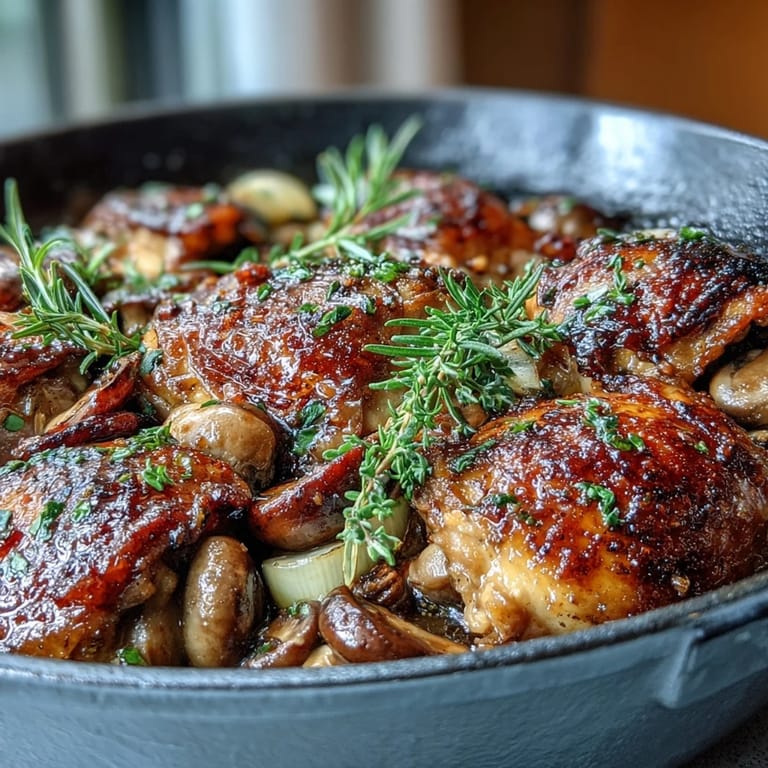
 This Coq au Vin Rosé offers a sophisticated and lighter perspective on the quintessential French classic. By substituting the traditional bold red wine with a crisp, dry rosé, the dish transforms into an elegant meal with a delicate floral aroma and a stunning, pink-hued sauce. Tender chicken pieces are braised to perfection alongside earthy cremini mushrooms and sweet carrots, creating a comforting yet refined experience that is perfect for any season.
Save Pin The secret to this dish lies in the harmony of the aromatics. The combination of leeks, garlic, and fresh herbs like thyme and rosemary infuses the rosé-based broth with layers of depth. The addition of heavy cream at the very end binds the flavors together, resulting in a glossy, luxurious sauce that coats every ingredient beautifully.
Ingredients
Tired of Takeout? 🥡
Get 10 meals you can make faster than delivery arrives. Seriously.
One email. No spam. Unsubscribe anytime.
- Poultry: 1.5 kg (about 3 1/4 lbs) bone-in, skin-on chicken pieces (thighs and drumsticks recommended)
- Marinade & Sauce: 500 ml (2 cups) dry rosé wine, 2 tbsp olive oil, 1 medium onion (finely chopped), 2 garlic cloves (minced), 2 carrots (peeled and sliced), 200 g (7 oz) cremini or button mushrooms (quartered), 1 small leek (white and light green parts, sliced), 2 tbsp tomato paste, 1 tbsp all-purpose flour (optional), 200 ml (3/4 cup + 1 tbsp) heavy cream, 1 bay leaf, 4 sprigs fresh thyme, 1 sprig fresh rosemary, salt, and freshly ground black pepper.
- Garnish: 2 tbsp fresh parsley, chopped.
Instructions
- Step 1
- Pat chicken pieces dry and season with salt and pepper.
- Step 2
- In a large Dutch oven or heavy pot, heat olive oil over medium-high heat. Brown chicken on all sides in batches, about 5 minutes per batch. Transfer chicken to a plate.
- Step 3
- In the same pot, add onions, carrots, and leek. Sauté for 4–5 minutes until softened. Add mushrooms and cook another 3 minutes.
- Step 4
- Stir in garlic, cook for 1 minute. Add tomato paste and cook for 1 minute more.
- Step 5
- Sprinkle flour (if using) over vegetables and stir to coat.
- Step 6
- Pour in rosé wine, scraping up browned bits from the pot. Return chicken to the pot. Add bay leaf, thyme, and rosemary.
- Step 7
- Bring to a simmer, cover, and cook gently over low heat for 45 minutes until chicken is very tender.
- Step 8
- Remove herbs. Stir in cream and simmer uncovered, 5–10 minutes, until sauce is slightly thickened and glossy. Adjust seasoning to taste.
- Step 9
- Serve chicken and sauce garnished with fresh parsley.
Zusatztipps für die Zubereitung
To achieve the best results, ensure you do not crowd the pan when browning the chicken; this allows for a proper sear rather than steaming. Using a high-quality dry rosé is essential, as the wine's flavor concentrates during the reduction process. For the most tender meat, keep the heat at a very gentle simmer throughout the cooking time.
Varianten und Anpassungen
For a deeper, more complex flavor profile, you can add a splash of cognac during the sautéing stage or substitute a portion of the wine with high-quality chicken stock. If you prefer a lighter sauce, replace the heavy cream with half-and-half or a dollop of crème fraîche for a slight tang.
Serviervorschläge
This rustic yet elegant dish is traditionally served with buttered potatoes or a side of fluffy white rice to soak up the creamy rosé sauce. A loaf of warm, crusty French bread is also an excellent accompaniment for ensuring not a drop of the delicious sauce goes to waste.
 Save Pin
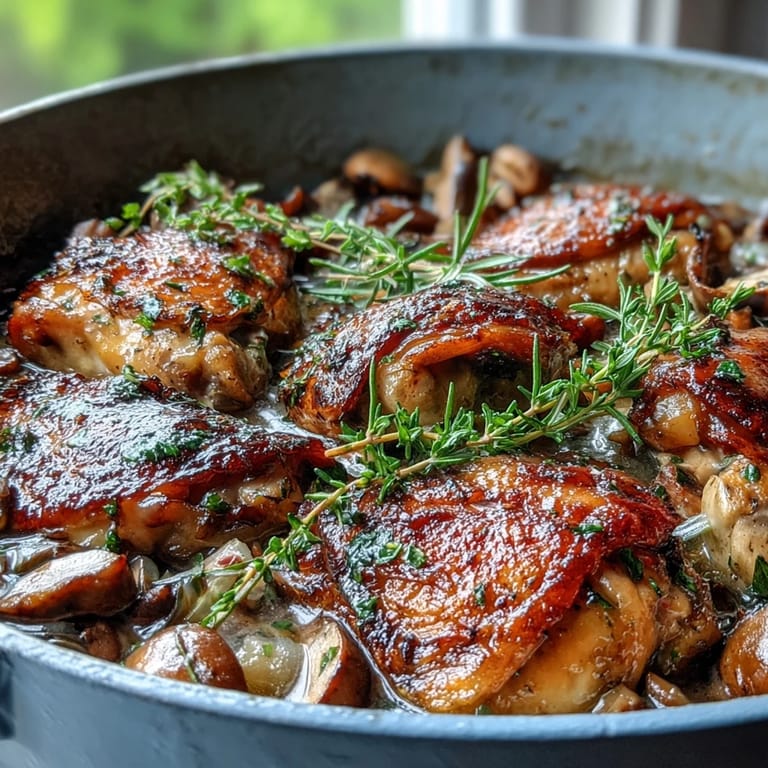
 With its beautiful presentation and balanced flavors, Coq au Vin Rosé is a testament to the timeless appeal of French braising techniques. It is a dish that feels special enough for a celebration while remaining simple enough for a dedicated weekend cook. Enjoy the tender chicken and the rich, fragrant sauce with your favorite glass of chilled rosé.
Recipe FAQs
- → Can I use chicken breasts instead of thighs and drumsticks?
Yes, but bone-in, skin-on thighs and drumsticks are recommended as they stay more tender during the long braising process and add more flavor to the sauce. If using breasts, reduce cooking time to 30-35 minutes to prevent drying out.
- → What type of rosé wine should I use?
Use a dry rosé wine that you would enjoy drinking. Avoid sweet or overly fruity varieties. A Provence-style rosé or dry Spanish rosado works beautifully. The wine's quality will directly impact the final dish's flavor.
- → Can I make this dish ahead of time?
Absolutely. This dish actually improves when made a day ahead as the flavors meld together. Prepare through step 7, let cool, and refrigerate. Reheat gently, then add the cream and finish cooking. The sauce will thicken beautifully upon reheating.
- → How do I thicken the sauce if it's too thin?
After adding the cream, simmer uncovered for an additional 10-15 minutes to reduce and concentrate the sauce. Alternatively, mix 1 tablespoon of cornstarch with 2 tablespoons of cold water and stir into the simmering sauce until desired consistency is reached.
- → What can I substitute for heavy cream?
You can use crème fraîche for a tangier flavor, half-and-half for a lighter option, or full-fat coconut cream for a dairy-free version. Greek yogurt works too but add it off heat to prevent curdling, and don't bring the sauce back to a boil.
- → Can I add other vegetables to this dish?
Yes, pearl onions, celery, parsnips, or baby potatoes are excellent additions. Add heartier vegetables like potatoes at the beginning of braising, and delicate ones like peas or green beans during the last 10 minutes of cooking.