 Save Pin
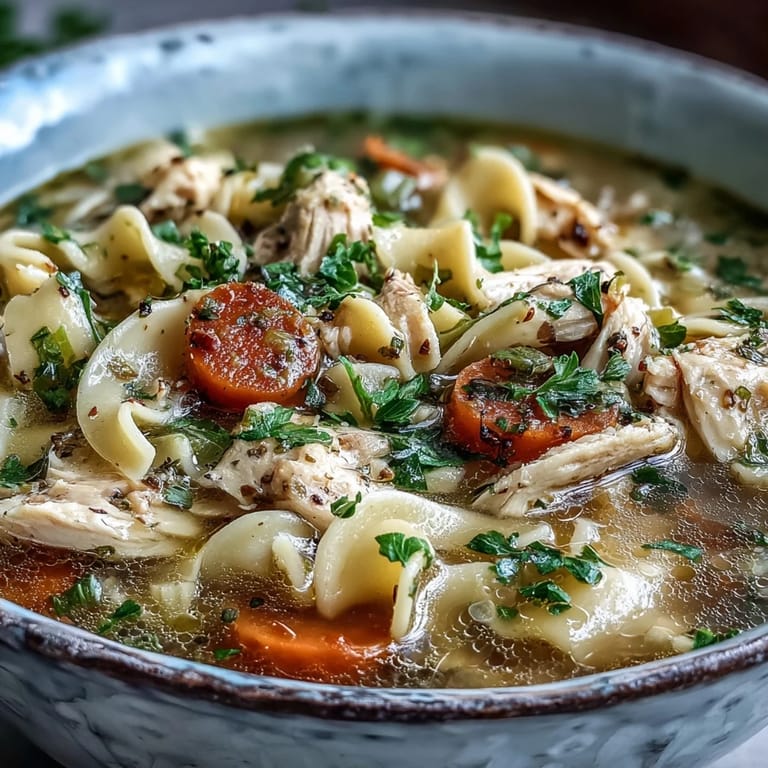
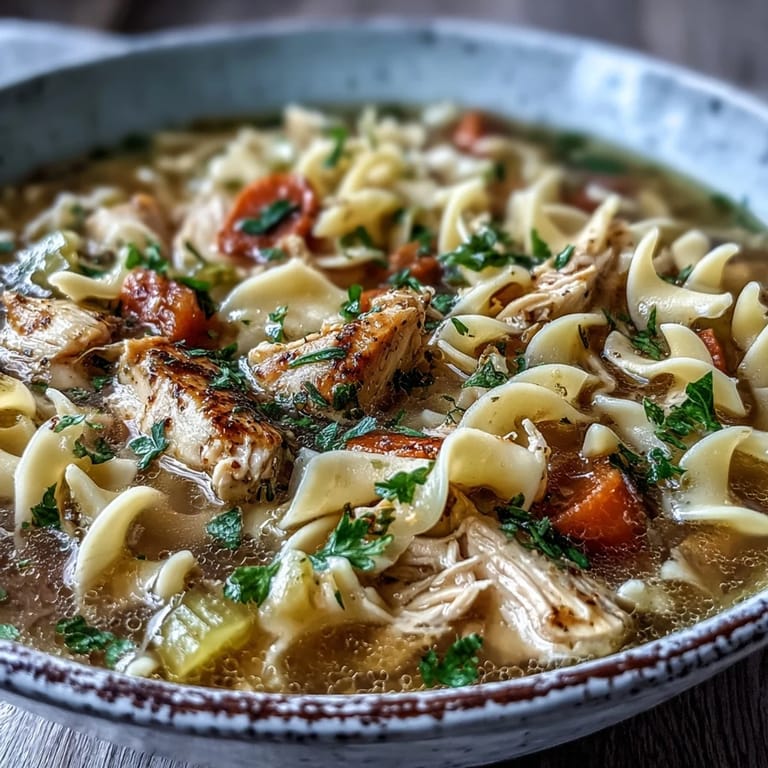
 There's something about the sound of a wooden spoon hitting the bottom of a pot that signals comfort is on the way. My sister called me one January afternoon, half-apologetic, asking if I could swing by with soup because her kids were under the weather and she'd run out of the frozen batches I usually make her. I didn't have time to overthink it, just grabbed what I had and threw together this chicken noodle soup in under an hour. She said it tasted like the one her mom used to make, which meant more to me than any cookbook compliment ever could.
The first time I made this without a recipe, I accidentally grabbed dill instead of parsley and nearly ruined the whole pot before catching it. Now that small mistake taught me something: this soup has enough backbone in its broth and aromatics that it can handle a little chaos. That's when I realized why people reach for it so often. It doesn't require perfection, just presence.
Ingredients
- Boneless, skinless chicken breasts (2, about 350 g, diced): Cut them into bite-sized pieces so they cook evenly and won't demand aggressive chewing later, which matters when you're trying to eat while feeling under the weather.
- Onion (1 medium, diced): This is your flavor foundation, the part that makes people ask what you did differently even though you followed the usual playbook.
- Carrots (2 medium, peeled and sliced): They sweeten as they soften, becoming almost candied after 10 minutes in the broth, and their color keeps the bowl from looking dull.
- Celery stalks (2, sliced): Don't skip this; it adds a subtle earthiness that sounds boring but makes the whole thing taste intentional.
- Garlic (2 cloves, minced): One minute of cooking is all it needs to fill your kitchen with that smell that says someone's taking care of dinner.
- Low-sodium chicken broth (1.5 liters or 6 cups): Low-sodium gives you control over the salt, which matters because a salty soup is a ruined soup, and nobody wants to explain that to the person you're feeding.
- Egg noodles (120 g or 4 oz): They should still have a tiny bit of resistance when you bite them, not mushy, which is harder to achieve than it sounds.
- Bay leaf (1): It flavors without announcing itself, then gets fished out before serving like a secret that kept the whole thing together.
- Dried thyme (1/2 teaspoon): This herb feels natural in soup, bringing a gentle floral note that makes it taste less generic.
- Dried parsley (1/2 teaspoon, plus extra for garnish): The fresh stuff is nicer for garnish, but the dried version works perfectly in the broth itself.
- Salt and freshly ground black pepper: Taste as you go because the broth is already salted and you're adding noodles, which have their own sodium story.
- Olive oil (2 tablespoons): This is the first step to flavor, so don't use the dusty bottle from the back of your cabinet.
Tired of Takeout? 🥡
Get 10 meals you can make faster than delivery arrives. Seriously.
One email. No spam. Unsubscribe anytime.
Instructions
- Get your base going:
- Heat olive oil in a large pot over medium heat, then add the onion, carrots, and celery. Let them sit and soften for 4 to 5 minutes, stirring now and then so they catch some color but don't burn. You'll know it's right when the onion turns translucent and the whole kitchen smells welcoming.
- Wake up the garlic:
- Stir in your minced garlic and cook for just about a minute, until it's fragrant enough to make you lean closer to the pot. This quick step is crucial because garlic turns bitter if it cooks too long.
- Add the chicken:
- Toss in your diced chicken and stir it around for 3 to 4 minutes, breaking up any pieces that stick together. You're not looking for a golden sear here, just a moment where the outside loses its raw pink appearance.
- Build the broth:
- Pour in your chicken broth and add the bay leaf, thyme, parsley, salt, and pepper. Stir it all together and bring it to a gentle boil, which should take about 5 minutes. The surface will start moving in urgent little waves when it's ready.
- Simmer and let things relax:
- Turn the heat down and let everything bubble gently for 10 minutes so the chicken finishes cooking through and the flavors start getting to know each other. This is when you can step away and do something else, but check on it once or twice.
- Add the noodles:
- Drop in your egg noodles and give them a gentle stir so they don't clump together at the bottom. Simmer for 8 to 10 minutes, tasting one noodle around the 8-minute mark to see if it's where you want it.
- Finish and taste:
- Fish out the bay leaf with a spoon and take a real moment to taste the soup, adjusting salt and pepper to your liking. This is your last chance to make it yours, so don't rush it.
- Serve with care:
- Ladle the soup into bowls and scatter extra fresh parsley on top if you have it, which adds a little brightness right before it hits your mouth.
 Save Pin
 Last winter, my neighbor brought over a bowl of this soup when my husband had the flu, and sitting together at the kitchen table while he actually ate something felt like a small victory. Food has a way of doing that sometimes, showing up as both practical and deeply personal all at once. That bowl meant more than she probably realized.
Why This Soup Never Feels Boring
The secret is that nothing here is fighting for attention. The vegetables don't overshadow the chicken, the broth is flavorful but not aggressive, and the noodles are just there to make you feel full and satisfied. It's a soup that understands its place and doesn't try to be something it's not, which sounds simple until you think about how many recipes fail because they're trying too hard. The restraint is what makes it work.
Ways to Make It Your Own
If bone-in chicken breasts are what you have, absolutely use them, and just shred the meat with two forks once it's soft enough. For brightness, a squeeze of lemon juice at the end changes everything without tasting obvious. The notes suggest gluten-free noodles if that matters to your household, and honestly, they work just fine.
Storing and Reheating
This soup keeps beautifully in the refrigerator for four days and tastes almost better the next day when the flavors have had time to fully marry. Reheat it gently on the stovetop over medium heat, stirring occasionally, and add a splash of water if it's thickened too much. Avoid the microwave if you can because the noodles won't forgive you for heating unevenly.
- Cool it completely before refrigerating so you don't raise the temperature of everything else in there.
- Freeze it in portions if you want a backup on hand for the exact moment someone needs comfort.
- If you're bringing it to someone else's house, transport it in a insulated container so it stays hot until it matters.
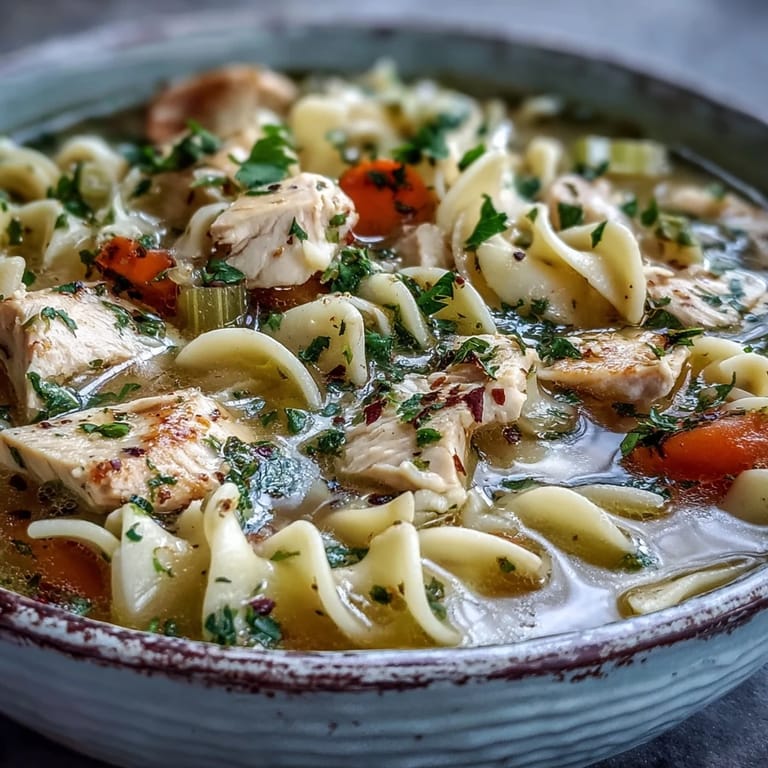 Save Pin
 There's a reason this soup shows up on tables when people need feeding and hearts need warming. Make it without pressure, serve it without ceremony, and watch how it does its quiet work.
Recipe FAQs
- → How long does it take to make?
Total time is 40 minutes, including 15 minutes of prep and 25 minutes of cooking. The broth simmers for 10 minutes before adding noodles, which cook for another 8-10 minutes.
- → Can I freeze this for later?
Yes, though it's best to add noodles when reheating since they can become mushy when frozen. Freeze the broth and vegetables together, then cook fresh noodles when you're ready to serve.
- → What type of chicken works best?
Boneless, skinless chicken breasts work well for quick cooking. For deeper flavor, use bone-in chicken pieces and shred the meat after simmering, removing bones before serving.
- → How can I make this gluten-free?
Simply substitute the egg noodles with gluten-free pasta alternatives. Rice noodles or quinoa pasta both work beautifully in this broth. Always verify your broth is certified gluten-free.
- → What vegetables can I add?
Beyond the classic carrots, celery, and onions, try adding diced potatoes, green beans, or spinach during the final minutes. Fresh herbs like dill or rosemary also complement the flavors nicely.