 Save Pin
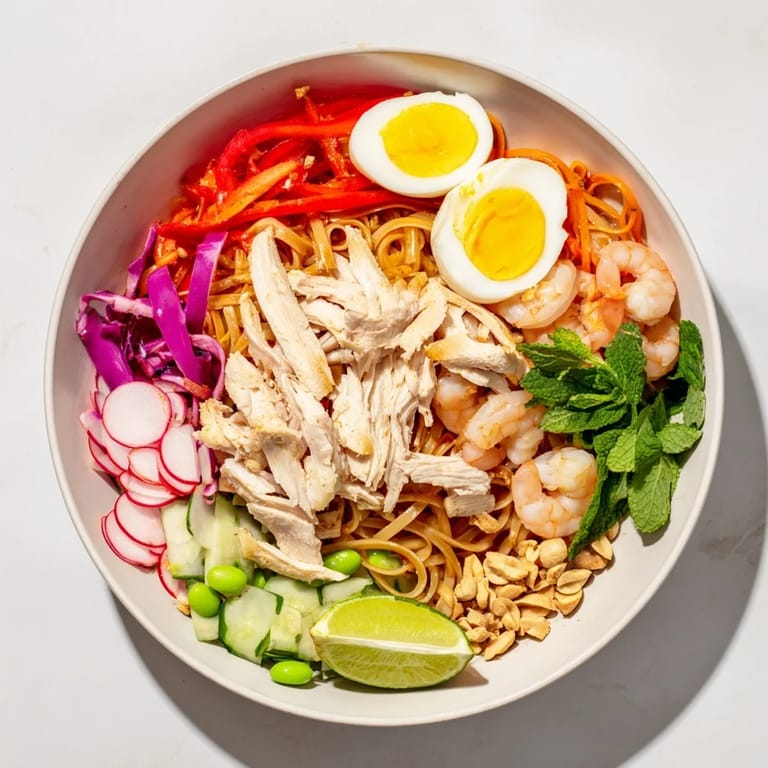
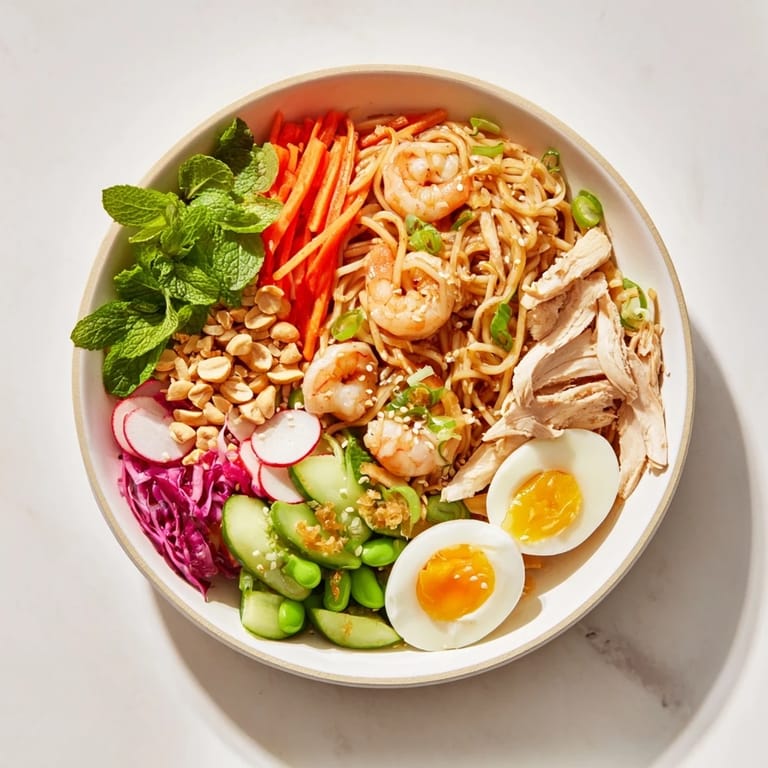
 I'll never forget the first time I arranged an Asian fusion noodle board at home—it was supposed to be a casual Tuesday dinner, but the moment I stepped back and saw all those vibrant colors arranged in perfect rows, I realized I'd created something that felt more like edible art than just a meal. My guests stood speechless for a moment before diving in, and I understood then that sometimes the most memorable dishes are the ones that invite everyone to build their own perfect bite.
I served this board for my sister's birthday dinner, and what struck me most wasn't just how beautiful it looked on the table, but how it brought everyone together in a way a plated meal never quite does. People were laughing, sharing sauces, building their favorite combinations—it became less about eating and more about the experience of gathering.
Ingredients
- Rice noodles or soba noodles (300 g): Rice noodles give you a delicate sweetness and tender bite that soaks up sauce beautifully, while soba brings an earthy nuttiness—I've learned that soba holds its shape better if you're not serving immediately, so that's my trick for make-ahead entertaining
- Sesame oil (1 tbsp): This isn't just seasoning, it's your insurance against clumpy noodles—the slick coating keeps everything separated and adds a toasted aroma that makes people pause and ask what smells so good
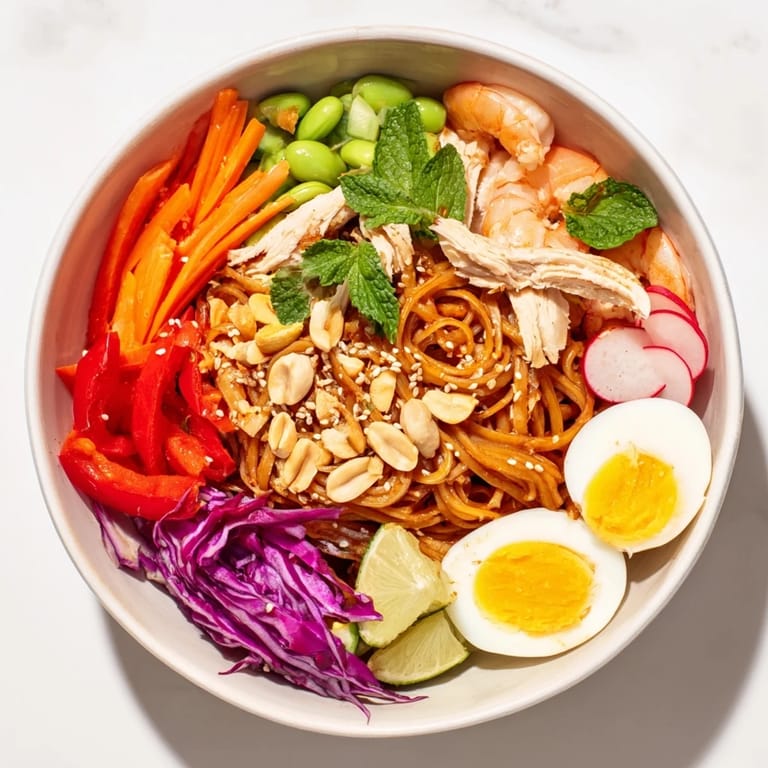
- Cooked chicken breast, thinly sliced (200 g): Slice it thin enough to bend without breaking, and remember that the thinner you go, the faster it absorbs whatever sauce your guests choose
- Cooked shrimp, peeled and deveined (150 g): I learned the hard way that overcooked shrimp tastes rubbery on a board—cook them just until they curve into a C shape, then chill them completely before arranging
- Boiled eggs, halved (2): The creamy yolk becomes a natural sauce when broken into your noodles, so don't skip this even if you think you don't like eggs
- Julienned carrots (1 cup): The sweetness of raw carrot balances the savory sauces in a way that makes everything taste more complete
- Thinly sliced cucumber (1 cup): Cucumber is your cooling agent on a warm plate—it keeps the whole experience refreshing rather than heavy
- Julienned red bell pepper (1 cup): The slight sweetness and bright color are essential to the board's visual appeal, and honestly, the crunch is satisfying in a way that makes you feel like you're eating something fresher than you actually are
- Thinly sliced red cabbage (1 cup): This holds its crunch longer than most vegetables, which matters when you're serving a board that sits out for 20 minutes
- Cooked edamame, shelled (1 cup): The protein and slight salinity they bring is underrated—they're not just there for color, they're there for substance
- Thinly sliced radishes (4): A moment of peppery surprise that prevents the board from ever tasting one-note
- Sliced scallions (2): Fresh onion flavor that ties everything together without overwhelming anything else
- Fresh cilantro leaves (1/4 cup): The herbal brightness that makes people say they taste something they can't quite name
- Fresh mint leaves (1/4 cup): Mint on a savory noodle board was a revelation the first time I tried it—it adds coolness and sophistication
- Roasted peanuts, chopped (1/4 cup): Crunch is everything, and peanuts deliver it plus a rich flavor that anchors the whole experience
- Toasted sesame seeds (2 tbsp): These tiny seeds unlock when you toast them, releasing a nutty aroma and depth that raw seeds just can't provide
- Lime wedges: Squeeze a little lime over everything at the end and suddenly all the flavors snap into focus—it's like turning up the brightness on a photo
- Soy sauce (1/3 cup): The foundation sauce that most people reach for first, warm and deeply savory
- Spicy peanut sauce (1/3 cup): Creamy, rich, with just enough heat to make you feel alive—this is the sauce that converts people who think they don't like spicy food
- Hoisin sauce (1/3 cup): Sweet and thick, it clings to noodles like a blanket and adds depth without being demanding
- Sweet chili sauce (1/3 cup): The unexpected choice that makes everything feel summery and bright
Tired of Takeout? 🥡
Get 10 meals you can make faster than delivery arrives. Seriously.
One email. No spam. Unsubscribe anytime.
Instructions
- Cook Your Noodles to Just-Right Texture:
- Follow your package instructions carefully—noodles continue to soften as they cool, so err on the side of slightly underdone. Drain them, then run cold water over them while gently separating them with your fingers, almost like you're giving them a little massage. This stops the cooking and prevents sticking. Toss everything with that sesame oil while they're still slightly warm so the oil coats each strand evenly.
- Prep Every Ingredient with Care and Intention:
- This is where the magic lives—take your time with your knife work, and don't rush. Julienne your carrots thin enough to bend, slice your cucumbers almost translucent, cut your radishes so thin they're nearly see-through. You're not just cutting vegetables, you're creating a visual experience. As you prep each item, arrange it in separate piles or bowls so you can see exactly how much you have and what the colors look like together.
- Arrange Your Board Like You're Telling a Story:
- Start by placing your central sauce bowl in the exact center of your board or platter. This is your anchor. Now look at your space—imagine it divided into sections, each one a different conversation. One section for noodles, one for proteins, others for vegetables. Place each element in neat rows or fan shapes, creating visual flow as if someone's eye naturally wants to move from one color to the next. Stand back frequently and look at your work from different angles. You want balance, but you also want drama—let some colors pop next to their opposites.
- Position Your Proteins with Intention:
- Arrange your chicken, shrimp, eggs, and tofu (if using) in separate clusters rather than mixing them together. This way, each person can easily see what protein options exist and choose according to their mood. The halved eggs should show off their beautiful yolks, so arrange them cut-side up.
- Create Your Sauce Quartets:
- If you're using a divided bowl, fill each section with one sauce—soy in one, peanut in another, hoisin and chili in the remaining two. If using four small bowls, nestle them into the center space. The sauces should look inviting, so wipe any drips from the edges. Each color tells its own story and promises its own flavor journey.
- Fill Every Empty Space with Purpose:
- Now comes the final puzzle—fill the remaining room on your board with noodles, vegetables, and garnishes, creating a balanced composition. Sprinkle cilantro and mint throughout rather than grouping them all in one spot. Scatter sesame seeds and peanuts where they'll catch the light. Add lime wedges in a cluster that feels natural. Step back again—does anything look lonely? Does any color feel repeated too close together? Adjust until your board tells a visual story that makes people want to pick up their chopsticks immediately.
- Finish with Fresh Herbs and Brightness:
- Just before serving, place extra cilantro and mint on the side along with additional lime wedges. This signals to your guests that they can add more freshness if they want, and it keeps the board feeling alive rather than static.
 Save Pin
 There was a dinner where a guest who swore they didn't like cilantro discovered it on the board, tasted it nervously, and ended up using it in every single bite for the rest of the meal. That's when I understood—a noodle board isn't just about feeding people, it's about giving them permission to discover new things about their own tastes in a low-stakes, playful way.
Building Your Perfect Bite
The secret to this board is that there is no wrong way to eat it. Some people build delicate little wraps with vegetables and protein. Others create a chaos of everything mixed together. I've watched people make distinctly different bowls from the exact same board, each one absolutely perfect for that person in that moment. The board becomes a conversation starter without anyone having to say a word—it speaks through color and possibility.
Storage and Make-Ahead Magic
I've learned that you can prep nearly everything hours in advance and still have this taste fresh. Cook your noodles, chill them completely, and store in an airtight container. Prep all your vegetables, keep them in separate containers or wrapped in damp paper towels, and they'll stay crisp for up to 8 hours. Boil your eggs and cook your proteins the morning of if you can. The only thing you do right before serving is arrange it all on the board and pour your sauces into the center bowl. This means you can be present with your guests rather than frantically chopping in the kitchen.
Sauce Pairing Wisdom
I've discovered that each sauce tells a different story with the same noodles and vegetables. The soy sauce brings out savory depth, the peanut sauce adds richness and heat, the hoisin brings sweetness and thickness, and the chili brings brightness and spark. A sophisticated way to eat this board is to try each sauce individually first, then start mixing—maybe a little soy with a little peanut, or chili with hoisin. Your guests will feel like they're in flavor school, but it's actually the most delicious way to wake up your palate.
- Squeeze lime juice into every sauce you use—it's the secret that makes good taste like restaurant-quality
- If a sauce feels too thick, thin it with a few drops of rice vinegar or water, and suddenly it flows better and tastes brighter
- The sweetness of hoisin and chili sauce balances the heat of peanut sauce perfectly, so don't skip either one
 Save Pin
 This noodle board has become my favorite way to cook for people because it feels generous without feeling stressful, and it looks sophisticated without requiring any real technique. Every time someone pauses to admire it before eating, I know I've created something that became more than just dinner.
Recipe FAQs
- → What noodles work best for this dish?
Rice noodles or soba noodles are recommended for their texture and ability to absorb flavors without becoming mushy.
- → Can the proteins be substituted?
Yes, chicken, shrimp, or firm tofu can be used to suit dietary preferences, maintaining a balance of flavors and textures.
- → How should the dipping sauces be served?
Serve sauces in a divided bowl placed at the center of the platter, allowing guests to enjoy a variety of tastes with each bite.
- → What garnishes enhance the flavor?
Fresh cilantro, mint leaves, chopped roasted peanuts, and toasted sesame seeds add freshness and crunch to the dish.
- → Is this platter suitable for vegetarians?
Yes, substituting tofu for the animal proteins and ensuring sauces are vegetarian-friendly creates a balanced plant-based option.