 Save Pin
 I still remember the first time I assembled a French bistro board at home—it was during a lazy Sunday afternoon when friends called asking to stop by unexpectedly. Rather than panic, I wandered to my kitchen and realized I could create something elegant and effortless with just good bread, beautiful cheese, and a few quality ingredients. That day taught me that some of the most sophisticated meals require no cooking at all, just intention and an appreciation for simplicity. Now, this French bistro platter has become my go-to moment of calm before any gathering, a meditation in arrangement that somehow always impresses.
I'll never forget hosting a dinner party where someone asked if I'd spent hours in the kitchen. When I confessed it took just fifteen minutes, their face lit up with the kind of joy that comes from realizing elegance doesn't require exhaustion. That's the gift of this platter—it transforms a simple moment into an experience that feels like you've invited your guests into something precious and carefully considered.
Ingredients
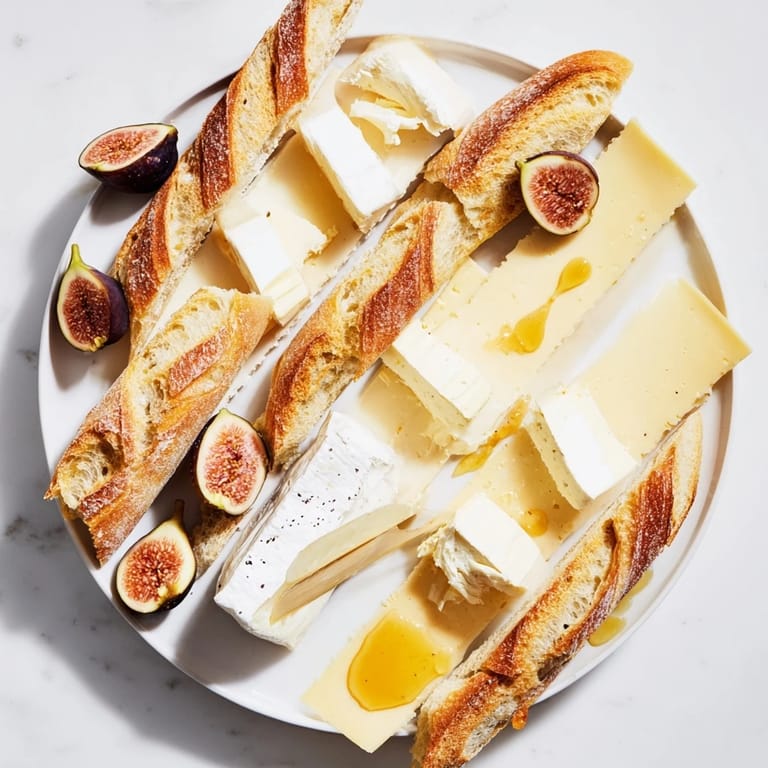
- French Baguettes (2 long, fresh): The foundation of your board—look for ones with a crispy exterior and tender crumb. Slice them diagonally just before serving so they stay fresh and create those beautiful elongated pieces that catch the light.
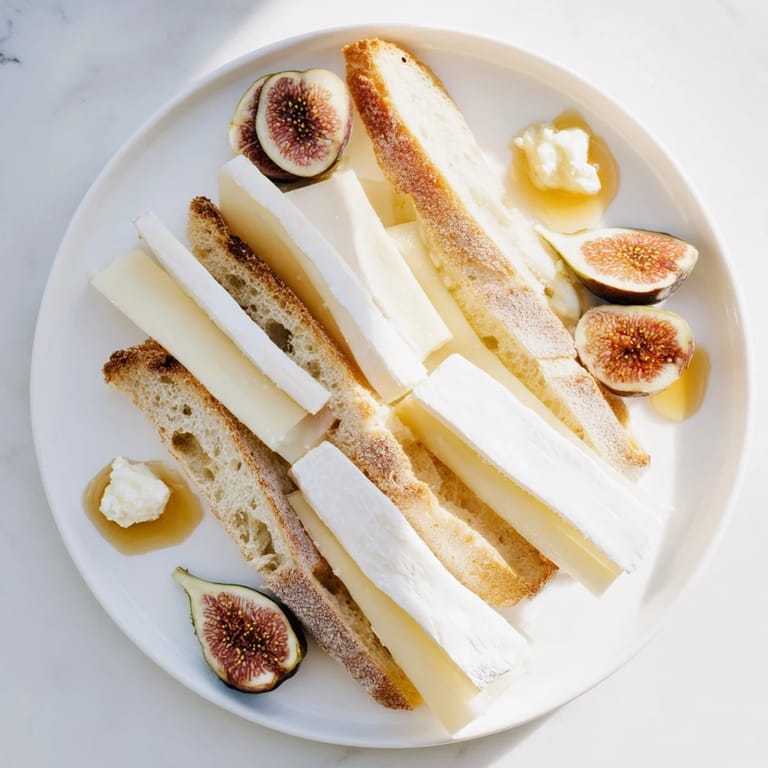
- Brie Cheese (150 g, sliced and fanned): This is your creamy anchor, the one that melts slightly as guests handle it. The fanning technique isn't just for looks; it makes each slice easy to grab and shows you care about presentation.
- Comté Cheese (150 g, sliced and fanned): The nutty counterpart to Brie's creaminess—Comté brings depth and a subtle sweetness that pairs beautifully with honey. It's the cheese that makes people pause and ask what it is.
- Chèvre, Goat Cheese (100 g, sliced): Tangy and bright, this brings a welcome contrast and reminds guests there's complexity on the board. It's the quiet sophisticate in the corner.
- Fresh Figs or Grapes (12 pieces): The jewels of your platter—they add color, sweetness, and that moment of freshness between savory bites. Choose the most beautiful ones you can find; they deserve to be seen.
- Unsalted Butter (50 g, softened): Creamy and pure, this is meant to spread gently on warm bread. Room temperature is essential—it should yield to a knife without resistance.
- High-Quality Honey (2 tbsp): This is where you invest in something truly good. Drizzle it over the cheese and watch how it becomes more than sweetness—it becomes an experience, especially with the tanginess of goat cheese.
- Whole Grain Dijon Mustard (1 tbsp): The secret sophisticate in the corner—just a small dollop transforms simple bread and cheese into something distinctly French. Its texture and slight heat make all the difference.
- Flaky Sea Salt & Freshly Ground Black Pepper: These final touches are not optional. They wake up every flavor on the board and show you understand the power of finishing touches.
Tired of Takeout? 🥡
Get 10 meals you can make faster than delivery arrives. Seriously.
One email. No spam. Unsubscribe anytime.
Instructions
- Slice Your Baguettes with Intention:
- Using a sharp bread knife, angle your cuts diagonally at about forty-five degrees—this creates those elegant elongated pieces that are as beautiful as they are practical. Don't rush this step; let each slice be intentional. You'll want them thin enough to be delicate but sturdy enough to hold toppings.
- Create Your Cheese Landscape:
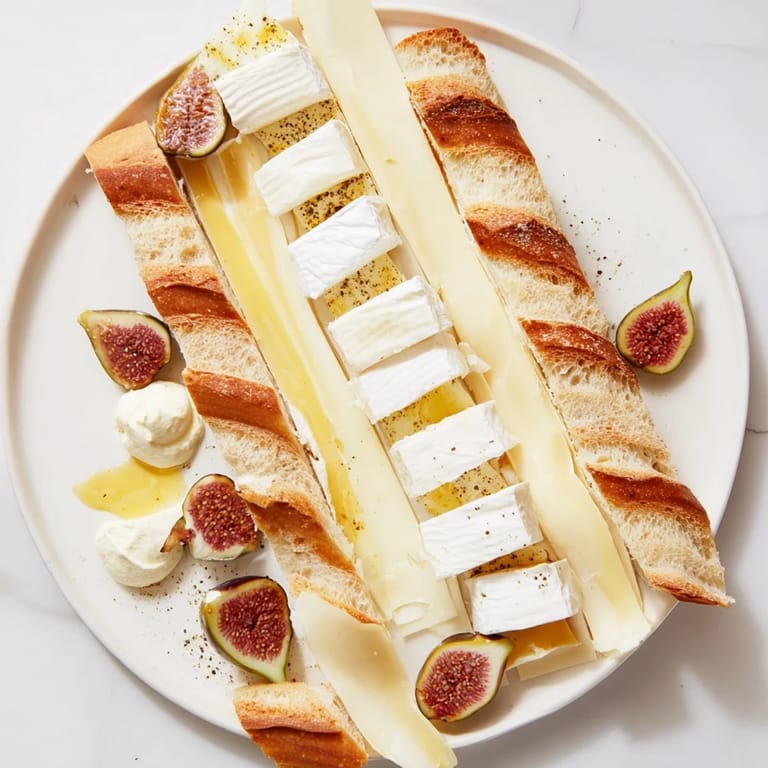
- This is where the magic happens. Arrange your Brie slices in overlapping rows on one side of the platter, fanning them so light catches each slice. Do the same with Comté in a separate section. The separation honors each cheese's unique character while creating visual rhythm. Leave breathing room between sections—empty space is part of the design.
- Place Your Fruit Clusters:
- Nestle small groups of figs or grapes in the spaces between cheeses. Think of them as the finishing touches to a painting—they should feel placed, not scattered. Three to four figs together create more impact than spreading them throughout.
- Arrange Your Accompaniments:
- Place small ramekins of butter, honey, and mustard in their own dedicated spots, or if you prefer a flatter presentation, create small artful dollops directly on the platter. The key is making them accessible—guests should be able to reach each element without leaning across others.
- Finish with Restraint:
- Lightly dust the cheeses with flaky sea salt and a whisper of freshly ground black pepper. Less is more here; you want to enhance, not overwhelm. If using herbs, add just a small sprig or two—garnish, not crowding.
- Serve with Invitation:
- Bring the platter to the table and step back. The best moment is when guests begin building their own bites, discovering their own perfect combinations. This is when the platter truly comes alive.
 Save Pin
 There was an evening when I watched my grandmother's eyes light up as she built her first bite from this board. She created something small and perfect, held it like it was precious, and in that quiet moment, I understood that food isn't just sustenance—it's an invitation to slow down and feel like you belong to something gracious. That's what this platter does.
The Art of Arrangement
What I've learned through countless gatherings is that the arrangement of a board is a conversation with your guests. When you create negative space, leave room for their eyes to rest, and group elements with care, you're saying something without words: I thought about this moment. I considered how you would experience this. That consideration transforms simple ingredients into something that feels like hospitality. The platter becomes less about feeding hunger and more about creating a small moment of beauty in an ordinary day.
Understanding Your Cheeses
Each cheese on this board has its own story and moment to shine. Brie whispers softness and creaminess, melting slightly as your hand holds the bread. Comté speaks with a nutty, complex voice that grows more interesting the longer you let it sit on your tongue. Chèvre, the goat cheese, brings brightness and tang—the kind of flavor that makes you sit up and notice. Learning to taste these differences, to understand how they dance together, turns a platter into an education. When you taste them this way, intentionally, you're not just eating cheese—you're tasting the passion of the makers, the terroir of French farms, and the centuries of craft that brought these flavors into being.
Wine Pairing & the Complete Experience
The true French bistro experience isn't complete without considering what you pour into the glass beside this board. A chilled Sancerre with its bright acidity is like a conversation partner for Comté's nuttiness. Champagne brings celebration to every bite. Even a light Pinot Noir works beautifully. The magic happens when you begin to notice how the wine changes the cheese, how the cheese makes the bread taste different, how the honey on Brie feels like a revelation when paired with bubbles. This is the language of bistro culture—not just feeding yourself, but creating a complete sensory moment.
- Sancerre brings brightness that cuts through richness with elegance
- Champagne transforms simple bites into celebrations
- A light rosé becomes the bridge that ties everything together
 Save Pin
 This French bistro platter has taught me that elegance isn't about complexity—it's about knowing what to leave out. Every time I create one, I'm reminded that generosity of spirit shows in how thoughtfully you arrange a table. Make this for people you care about.
Recipe FAQs
- → What type of bread is best for this platter?
Long fresh French baguettes provide the ideal crisp texture and subtle flavor that pairs beautifully with the cheese selection.
- → Can I substitute the figs with other fruits?
Yes, sliced pears or apples work well to maintain the platter's fresh and elegant profile.
- → How should the cheeses be sliced for serving?
Slice and fan the Brie, Comté, and Chèvre cheeses into neat, overlapping rows to enhance visual appeal and ease of serving.
- → What accompaniments add to the flavor profile?
Butter, honey, and whole grain Dijon mustard provide rich, sweet, and tangy contrasts that elevate the platter.
- → Is any seasoning recommended for the cheeses?
Lightly sprinkle flaky sea salt and freshly ground black pepper to enhance the natural flavors without overpowering them.
- → What is the suggested serving size?
This platter yields four servings, ideal for an appetizer or light snack.