 Save Pin
 I discovered this dish on a misty morning hike through the Cascade foothills, where I stopped at a farmer's market tucked between towering Douglas firs. The vendor was arranging wild mushrooms and berries in the most artistic way, and something clicked—I realized I could recreate that forest floor magic on a plate. That afternoon in my kitchen, as rain pattered against the windows, I crafted this dish as a love letter to the Pacific Northwest landscape I'd grown to adore.
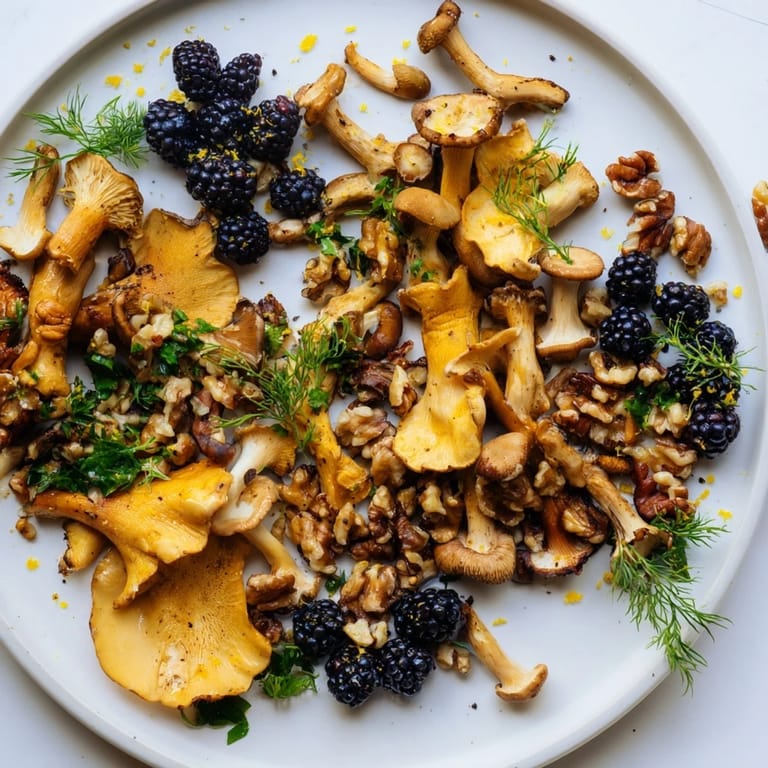
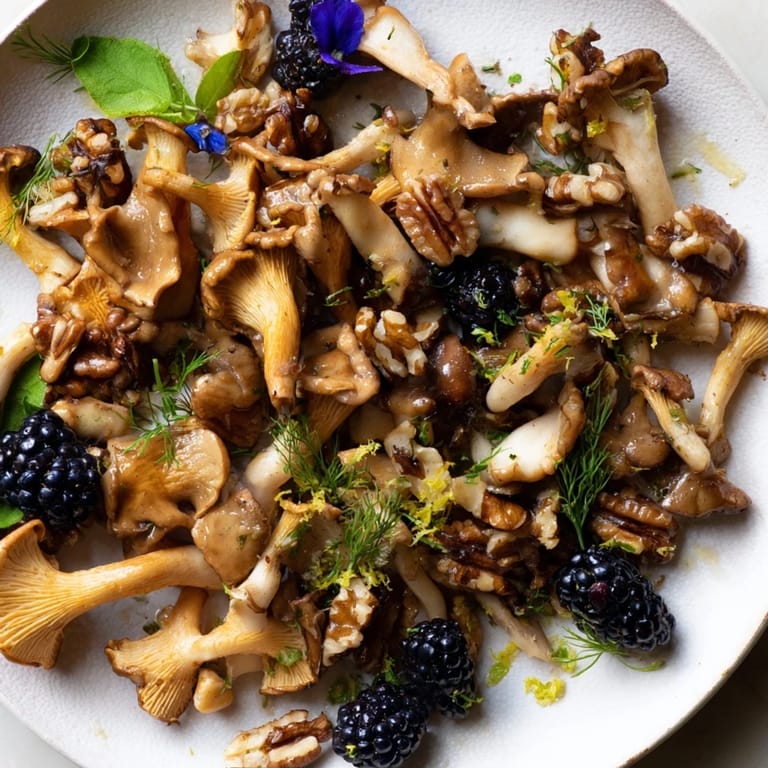
I remember serving this to my sister on her birthday last fall. She took one look at the plate—the deep purples of the berries nestled against golden mushrooms, that vibrant green herb moss—and actually gasped. We sat on the back porch as the light started to fade, and she told me it tasted like the forest felt. That's when I knew this recipe was more than just food; it was a moment captured on a plate.
Ingredients
- Mixed wild mushrooms (chanterelle, shiitake, oyster), 200 g: These are the foundation of your dish. Each variety brings its own personality—chanterelles are delicate and fruity, shiitake earthy and robust, oyster tender and mild. Don't buy them pre-sliced; slice them yourself so they cook evenly and brown properly.
- Olive oil and unsalted butter, 1 tbsp each: The butter adds richness to the mushrooms while olive oil keeps them from sticking. Together they create the perfect base for that golden-brown crust.
- Garlic clove, minced, 1: Just one clove—you want whisper of garlic, not a shout. Mince it fine so it disappears into the butter.
- Salt and freshly ground black pepper, to taste: Season as you cook, not all at once. This way the mushrooms release their moisture evenly.
- Toasted hazelnuts and walnuts, 50 g and 30 g: Toast them yourself if you can. The smell alone is worth it, and they'll have that deep, buttery flavor that transforms the whole dish. Coarse chop means you want texture and substance.
- Fresh blackberries and blueberries, 80 g and 60 g: Use the freshest berries you can find. They stay firm enough to handle but burst with flavor. The dark colors create that forest palette.
- Fresh parsley, dill, chervil or tarragon, and chives: These herbs are your green moss. Each one matters—parsley is your base, dill brings anise notes, chervil adds delicate sweetness, and chives give a whisper of onion. Finely chop so they cling together.
- Lemon zest from 1 small lemon: This bright note cuts through the earthiness and wakes up every bite.
- Flaky sea salt, a pinch: Flaky salt has better texture than fine salt. It catches the light and adds visual appeal.
Tired of Takeout? 🥡
Get 10 meals you can make faster than delivery arrives. Seriously.
One email. No spam. Unsubscribe anytime.
Instructions
- Clean and slice your mushrooms with intention:
- Wipe each mushroom gently with a damp cloth—never soak them. Slice them roughly the same thickness so they cook evenly. You want them to have room in the pan.
- Build a perfect sauté base:
- Heat your skillet over medium heat and let it get properly hot. Add olive oil, then butter, and watch it foam. When the foam subsides and smells nutty, you're ready. Add your minced garlic and let it bloom for just 30 seconds—you want it fragrant, not burned.
- Cook mushrooms until they're golden and tender:
- Add your mushrooms in a single layer. Let them sit for 2 minutes without stirring—this is how they develop that deep brown crust. Then toss and cook another 4–6 minutes. They should be tender when you pierce them with a fork, and you should see golden spots on every piece. Season with salt and pepper as they cook. Set them aside on a plate to cool slightly—this matters because they'll continue cooking a tiny bit.
- Make your herb moss in a separate bowl:
- Finely chop all your fresh herbs and put them in a mixing bowl. Add olive oil, lemon zest, and that pinch of flaky salt. Toss gently with your fingers until the herbs start to cling together and look vibrant and alive. This is your edible forest floor.
- Toast your nuts until they smell like autumn:
- If you're using raw nuts, spread them on a baking tray and toast at 350°F for 8–10 minutes. You're looking for deep golden color and that incredible fragrant smell that fills your kitchen. Let them cool completely, then coarsely chop so you have visible texture.
- Arrange your platter like a forest:
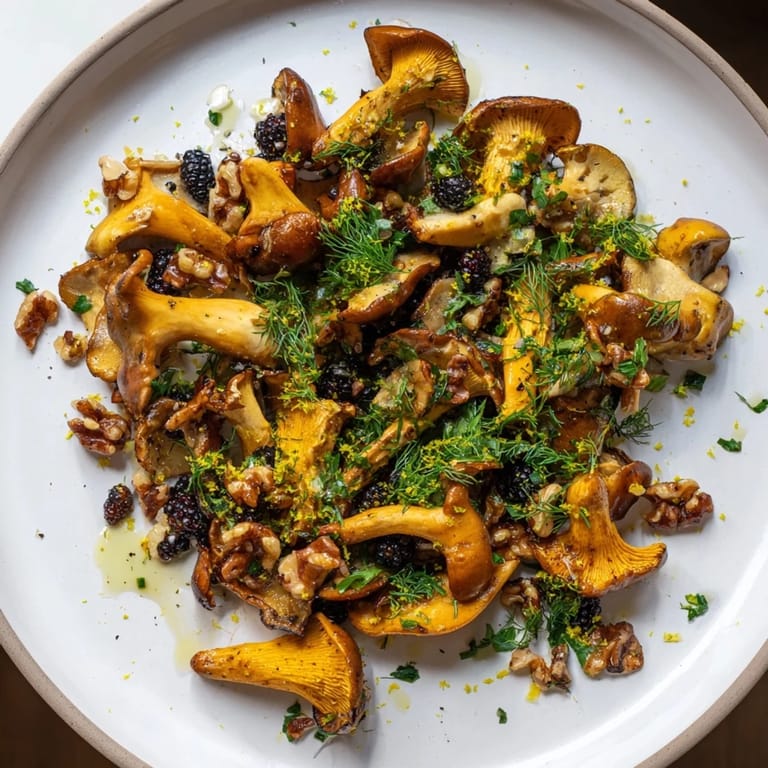
- Use a large platter or individual plates. This is where you get to be an artist. Create dense, organic clusters of mushrooms, nuts, and berries—not in neat rows but in the way they'd actually fall on a forest floor. Generously spoon your herb moss around and between the clusters, filling the gaps and creating that lush, mossy effect. Step back and look at it. Does it feel like the forest? Good.
- Final touches and serving:
- Add edible flowers and microgreens if you have them—these add delicate beauty. Serve at room temperature so all the flavors can sing. This dish is meant to be admired before it's eaten.
 Save Pin
 There was a moment when my friend took a bite and closed her eyes. She said it tasted like she was tasting the forest itself—the earthiness of soil after rain, the sweetness of berries, the bitter green of moss. That's when this dish stopped being just a recipe for me and became a way to share something meaningful.
Why Wild Mushrooms Matter
Wild mushrooms aren't just an ingredient—they're the soul of this dish. Each type brings complexity you can't get from regular button mushrooms. Chanterelles have a subtle fruity note, shiitake delivers deep umami, and oyster mushrooms provide tender delicacy. When you cook them properly with butter and let them develop that golden crust, they become the anchor that everything else revolves around. I learned this the hard way after trying to shortcut with store-bought cremini mushrooms. Never again. The difference is the difference between a recipe and an experience.
The Art of Plating
This dish teaches you something valuable about presentation. You're not arranging ingredients in neat rows—you're creating a landscape. Think of how things actually fall in nature. The mushrooms cluster together. The berries nestle into gaps. The herb moss fills the spaces like living green ground cover. The moment you stop thinking in straight lines and start thinking in organic shapes, the plate transforms. Your eyes land on different spots each time, discovering something new. This philosophy works for any plate you make after this.
Pairing and Serving Suggestions
This dish is versatile in how you present it. Serve it as an elegant starter, a light lunch, or even as part of a larger grazing board. It pairs beautifully with a light Pinot Noir if you're drinking wine—the wine's earthiness matches the mushrooms while its acidity brightens the berries. If you prefer non-alcoholic pairing, a crisp dry cider works magic. You can also add roasted root vegetables like beets or carrots for more substance, or tuck pickled shallots through the clusters for bright acidity. Microgreens and edible flowers aren't just pretty—they add peppery notes and delicate texture.
- Make this dish ahead by cooking the mushrooms and toasting the nuts hours before, then assemble just before serving so the herbs stay vibrant
- If berries are out of season, use pomegranate seeds or even dried cranberries—the principle stays the same
- Double the herb moss if you love that fresh, green flavor—it's impossible to overdo it
 Save Pin
 This recipe reminds me that the best dishes aren't complicated—they're just made with attention and respect for ingredients. Every time you make this, you're telling the forest thank you.
Recipe FAQs
- → What types of mushrooms are best for this dish?
Mixed wild mushrooms like chanterelle, shiitake, and oyster offer earthy, rich flavors that complement the other ingredients beautifully.
- → How do you prepare the herb moss?
Finely chop fresh herbs including parsley, dill, chervil or tarragon, and chives. Toss them with olive oil, lemon zest, and flaky sea salt until they form a slightly clumping, vibrant green mixture.
- → Can the nuts be substituted?
Yes, toasted pecans or pine nuts are excellent alternatives that provide a warm, nutty crunch.
- → What is the purpose of the berry clusters in the dish?
Fresh blackberries and blueberries add juicy sweetness and a burst of color, balancing the earthiness of mushrooms and nuts.
- → How should the dish be served?
Arrange the components in dense, organic clusters on a plate and spoon the herb moss around and between them. Serve at room temperature for optimal flavor.
- → Is this dish suitable for vegans?
To make it vegan, simply replace the butter with a plant-based alternative and ensure all other ingredients fit dietary preferences.