 Save Pin
 I still remember the first time I stood in my nonno's kitchen in Tuscany, watching him arrange a board of cheeses and cured meats with the same care an artist uses with a canvas. He told me that this wasn't just food—it was an invitation to slow down, to gather, to taste Italy in every bite. That moment changed how I think about cooking, and now whenever I build one of these boards, I'm transported back to that sunny afternoon, the smell of fresh rosemary in the air, and the sound of his voice saying, 'This is how we live.'
The first time I served this board at a dinner party, I was nervous. Would it be enough? Would people think it was too simple? But then I watched my friends' faces light up as they discovered hidden pockets of marinated artichokes, tore into warm bread, and layered flavors in their own way. The board became a conversation—everyone building their own perfect bite, sharing discoveries. That's when I understood: the simplest meals are often the most meaningful.
Ingredients
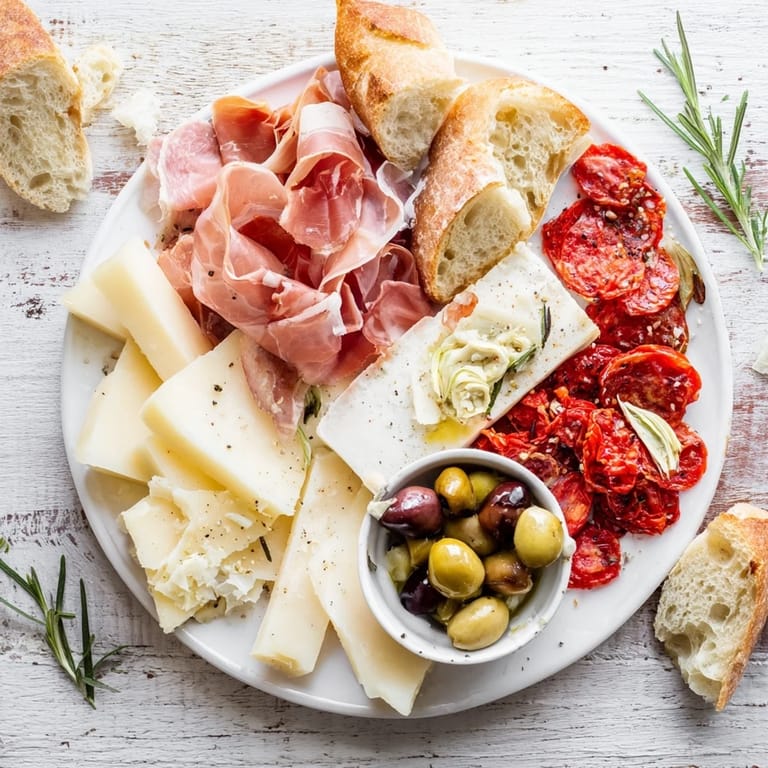
- Parmigiano-Reggiano, 200 g, broken into large chunks: This aged cheese is the soul of the board—its crystalline texture and complex, slightly salty flavor ground everything in authenticity. Break it by hand rather than cutting; the irregular edges catch the light beautifully and invite people to pick it up and taste it
- Pecorino Toscano, 200 g, cut into wedges: Where Parmigiano is sophisticated and complex, Pecorino is bold and pastoral—it tastes like the sheep that made it grazed on wild herbs. Wedges make it easy to grab and pair with bread
- Taleggio, 150 g, torn into rustic pieces: This is your creamy anchor. Its soft, almost buttery texture and fruity aroma make it the bridge between the hard cheeses and the cured meats. Tear it gently so it stays delicate
- Prosciutto di Parma, 150 g, loosely piled: The king of cured meats—paper-thin, salty-sweet, and fragrant with the Parma region's heritage. Pile it loosely so air flows through; this keeps it delicate and lets everyone pull exactly what they want
- Finocchiona salami, 120 g, thickly sliced: This Tuscan salami gets its character from fennel seeds, which give it a subtle anise warmth that surprises and delights. Slice it thick enough that it doesn't fall apart but thin enough to fold easily
- Coppa, 120 g, arranged in rustic folds: Coppa's marbling of fat and lean creates a silky mouthfeel. Arrange it in loose folds so it looks abundant and inviting, not neat and rationed
- Rustic Italian loaf, 1 large (such as ciabatta), torn into rough pieces: Tear it by hand just before serving—the irregular shapes and exposed crumb create pockets perfect for catching olive oil and cheese. A rustic loaf has enough character to stand up to strong flavors
- Castelvetrano olives, 1 cup: These buttery, mild green olives from Sicily are less aggressive than other varieties, so they won't overpower the delicate flavors. Their pale green color adds visual warmth
- Sun-dried tomatoes in olive oil, 1 cup, drained: These concentrate all the umami and sweetness of summer tomatoes. Drain them well so they don't make the bread soggy, but save that oil for drizzling
- Marinated artichoke hearts, 1 cup, quartered: Artichokes add brightness and a tender bite. Quarter them so they're easy to grab and eat, and their marinating liquid brings acidity that balances the richness
- Fresh grapes or figs, 1 small bunch, halved: Fruit feels like an unexpected gift on a savory board. The natural sweetness and juiciness cut through the salt and fat, refreshing your palate between bites
- Extra-virgin olive oil, 1/4 cup, for drizzling: This is liquid gold—use one you love tasting on its own. Drizzle it over the bread and cheese so every bite shimmers with flavor. The oil carries the flavors and makes everything feel luxurious
- Fresh rosemary sprigs, for garnish: A handful of fragrant rosemary isn't decoration—it's an invitation to smell Italy. Brush your hand across the sprigs as you reach for food, and you'll release their essential oils
- Coarse sea salt and cracked black pepper, to taste: Finish with restraint; the board already has plenty of salt from the cheese and cured meats. These are just final whispers of seasoning
Tired of Takeout? 🥡
Get 10 meals you can make faster than delivery arrives. Seriously.
One email. No spam. Unsubscribe anytime.
Instructions
- Set Your Foundation:
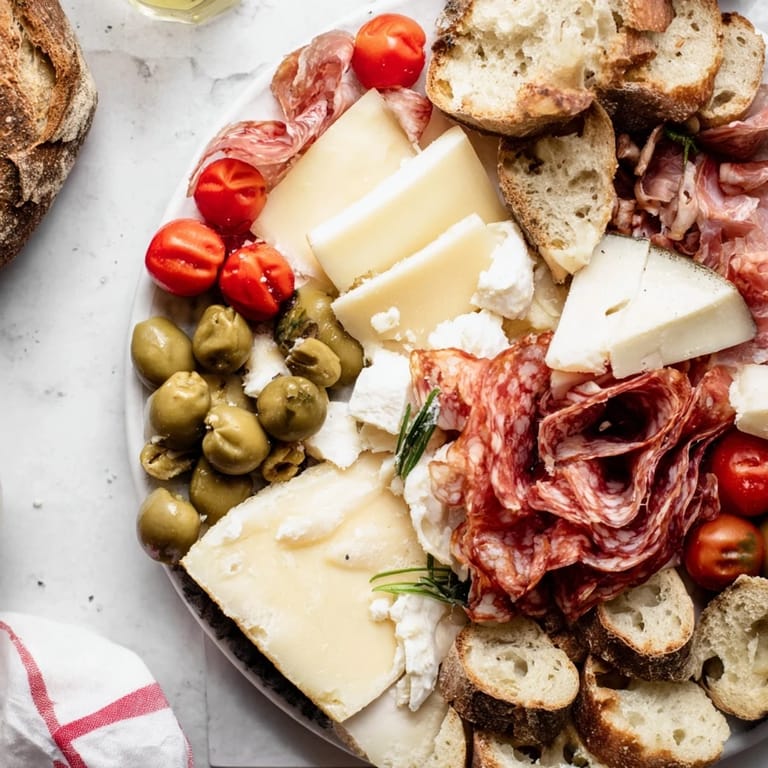
- Choose a large wooden board or platter that feels generous—this isn't the time for minimalism. Place it in front of you and take a breath. You're about to create something that will bring people together. Start by breaking the cheeses into irregular chunks and wedges. Let them fall where they want; imperfection is the entire aesthetic. The goal isn't neat arrangement but abundance and visual drama.
- Layer in the Cured Meats:
- Now loosely pile the prosciutto, letting it drape and fold naturally. Think of it like fabric, not like something you're organizing. Arrange the coppa in generous folds—this meat is beautiful, so let people see its marbling. Lay the salami slices in overlapping rows, but not too tight. Leave space for air and light to play across them.
- Scatter the Bread:
- Tear the loaf into rough, uneven pieces—some thick, some thin, some with crust, some mostly crumb. Scatter them around the board as if you've just broken bread with your hands. The irregularity makes the board feel alive and inviting. Tuck pieces between cheeses and meats so the board feels integrated, not compartmentalized.
- Fill the Empty Spaces:
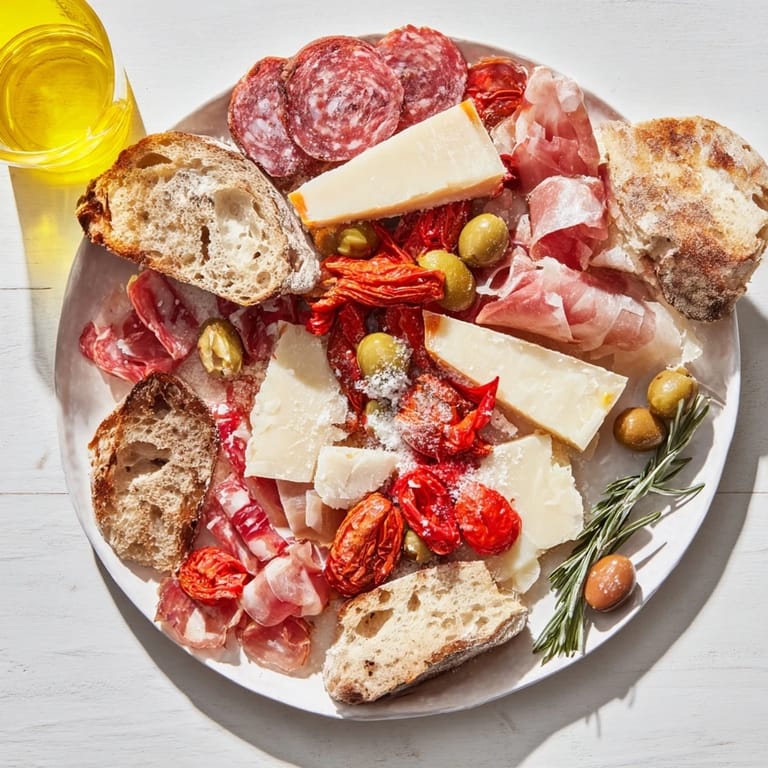
- Now comes the joy: pile the olives in one generous cluster, the sun-dried tomatoes in another, the artichoke hearts in a third. Each element should have its own territory but feel part of the whole. Add the fruit scattered throughout—these little bursts of color and sweetness turn a board into an experience. Don't be stingy; abundance is the whole point.
- Finish with Oil and Fragrance:
- Drizzle your best olive oil over the bread and across some of the cheeses. Watch it glisten. Scatter fresh rosemary sprigs across the board—tuck them between ingredients so they release their aroma as people move around it. This is the moment the board transforms from food to an invitation.
- Season and Serve:
- Grind a small amount of coarse sea salt and cracked black pepper over everything. Taste a small piece to make sure the seasoning feels right—remember, the ingredients already carry salt, so you're just awakening them. Bring the board to the table and watch everyone's faces. This is what you've created: not just food, but a moment.
 Save Pin
 Years ago, my friend Marco brought a board exactly like this to a potluck, and I watched it become the center of conversation. People kept returning to it, not because they were hungry, but because it made them feel welcome. They could take exactly what they wanted, combine flavors however they dreamed, make it personal. That's when I realized that the best entertaining isn't about impressing people—it's about giving them permission to be themselves around your table.
The Art of Arrangement
There's a rhythm to building a board that you develop with practice. Think of it like conducting an orchestra—each ingredient has its own voice, but together they create harmony. The hard cheeses provide structure and anchor the palate, the soft Taleggio offers comfort, the cured meats bring elegance, and the bread is the canvas that lets everything else shine. As you arrange, think about color balance: the deep reds of the prosciutto and salami, the golden tones of the Taleggio, the pale green of the olives, the vibrant reds of the sun-dried tomatoes. Your eye should find interest wherever it lands, but not feel chaotic.
Wine and Pairing Magic
The beauty of serving this board is that you're not married to one drink. A robust Chianti Classico with its earthy notes and bright acidity cuts through the richness of the cured meats and cheese beautifully. A Sangiovese brings similar themes—it tastes like Tuscany, like the same soil that produced these ingredients. But honestly, this board works with almost any wine you love. The variety of flavors means there's something for everyone at the table. If you're serving without wine, sparkling water with fresh lemon becomes its own kind of refreshing, or even a simple Italian beer adds rustic charm.
Variations and Seasonal Thinking
The skeleton of this board is flexible, and that's what makes it so useful for a home cook. In spring, add fresh mozzarella and thin asparagus. In summer, pile on fresh figs and peaches. In autumn, add roasted walnuts and maybe some aged Asiago for extra nuttiness. In winter, swap fresh grapes for dried ones, add candied citrus peel, and include a aged Gorgonzola for deeper flavor. The beauty is that you're working with seasons and availability, which is the most Italian approach of all. Let what's at your market guide your choices, and the board will always feel current and alive.
- Pecorino Romano can replace Pecorino Toscano if you prefer a sharper, more assertive flavor
- Add roasted marcona almonds or candied hazelnuts for a textural surprise that nobody expects on a savory board
- Include a small bowl of hot honey drizzled over ricotta for those who want something warm and indulgent among the cool, fresh elements
 Save Pin
 This board isn't a recipe in the traditional sense—it's a philosophy about feeding people. It says, 'I gathered beautiful things for you. Help yourself. Make it yours.' That's the most generous thing a cook can offer.
Recipe FAQs
- → What cheeses are ideal for this Italian board?
Parmigiano-Reggiano, Pecorino Toscano, and Taleggio provide varied textures and rich, authentic flavors perfect for rustic boards.
- → Can I substitute the cured meats?
Yes, prosciutto can be replaced with similar dry-cured meats like bresaola, and salami varieties can vary based on preference.
- → What bread works best for this spread?
A large rustic loaf such as ciabatta with a crusty exterior and soft crumb complements the cheeses and meats beautifully.
- → How should I arrange the ingredients on the board?
Break cheeses into chunks and wedges for texture, pile cured meats in loose folds, and scatter bread pieces with olives and accompaniments evenly for balance.
- → Which accompaniments enhance this Italian board?
Sun-dried tomatoes, marinated artichokes, Castelvetrano olives, and fresh grapes or figs add brightness and variety to the palate.
- → What seasoning finishes this board?
A drizzle of extra-virgin olive oil, fresh rosemary sprigs, and a light sprinkle of coarse sea salt and cracked black pepper brighten the flavors.